Nonconformance Management
Nonconformance management is the structured process of identifying, documenting, evaluating, correcting, and preventing products, materials, or processes that do not meet specified requirements. An effective nonconformance management system improves product quality, strengthens regulatory compliance, reduces costs, and helps organizations continuously improve their manufacturing operations.
Whether following ISO 9001, AS9100, or an internal quality management system, a well-defined nonconformance process ensures issues are consistently investigated, corrective actions are implemented, and objective evidence is maintained for future audits.
What Is Nonconformance Management?
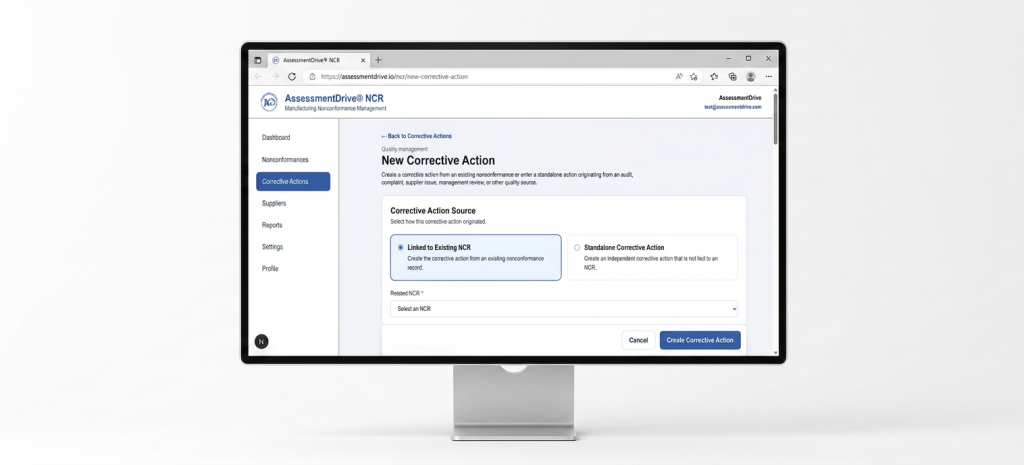
Nonconformance control provides a standardized workflow for controlling quality issues from initial discovery through final closure. Rather than relying on spreadsheets or disconnected documentation, organizations establish a repeatable process that captures relevant information, assigns responsibilities, tracks corrective actions, and verifies effectiveness.
The objective is not only to resolve individual quality issues but also to identify recurring trends and eliminate their underlying causes.
Why Nonconformance Management Matters
Manufacturing organizations face increasing demands for product quality, traceability, and regulatory compliance. An effective nonconformance process helps organizations:
| Benefit | Business Impact |
|---|---|
| Improved product quality | Reduces defects and customer complaints |
| Faster issue resolution | Shortens investigation and response time |
| Better traceability | Maintains complete quality records |
| Regulatory compliance | Supports ISO 9001 and AS9100 requirements |
| Continuous improvement | Identifies recurring quality trends |
| Reduced costs | Minimizes scrap, rework, and production delays |
The Nonconformance Management Process
Although every organization has unique procedures, most nonconformance control systems follow a similar workflow.
| Stage | Purpose |
| Identification | Detect and report the nonconformance |
| Documentation | Record affected products, processes, and evidence |
| Evaluation | Assess severity, risk, and disposition |
| Containment | Prevent additional nonconforming product from progressing |
| Investigation | Determine the root cause |
| Corrective Action | Implement actions to eliminate the cause |
| Verification | Confirm corrective actions are effective |
| Closure | Complete documentation and retain quality records |
Key Elements of an Effective Nonconformance Management System
Standardized Documentation
Consistent reporting ensures every nonconformance contains sufficient information for investigation, traceability, and future analysis.
Root Cause Investigation
Effective organizations move beyond treating symptoms by identifying the true cause of recurring quality issues using structured methods such as 5 Why analysis or Fishbone diagrams.
Corrective Action Management
Corrective actions should be assigned, tracked, verified, and formally closed only after effectiveness has been demonstrated.
Trend Analysis
Monitoring recurring nonconformances helps quality teams identify systemic issues before they become significant operational or customer concerns.
Digital Record Management
Electronic nonconformance management systems improve visibility, collaboration, reporting, and audit readiness while reducing administrative effort.
Common Causes of Manufacturing Nonconformances
Nonconformances may result from many factors, including:
- Incorrect manufacturing processes
- Equipment calibration issues
- Supplier quality problems
- Human error
- Drawing or specification changes
- Material defects
- Inspection failures
- Inadequate training
- Process variation
- Documentation errors
Identifying patterns across multiple events allows organizations to focus improvement efforts where they deliver the greatest impact.
Best Practices for Nonconformance Management
Organizations with mature quality systems typically:
- Document nonconformances immediately.
- Preserve objective evidence.
- Assign clear ownership.
- Investigate root causes rather than symptoms.
- Link corrective actions to quality events.
- Monitor recurring trends.
- Verify corrective action effectiveness.
- Maintain complete audit-ready records.
Supporting ISO 9001 and AS9100 Quality Systems
NCR management plays an important role within quality management systems by supporting controlled handling of nonconforming outputs, corrective actions, documented information, and continual improvement activities.
A structured process helps organizations demonstrate consistency, traceability, and accountability during internal and external audits.
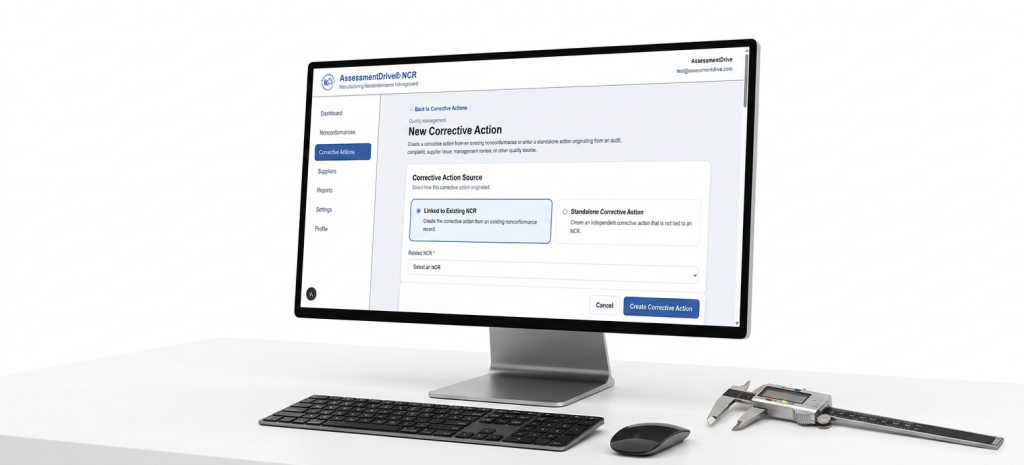
Modern Nonconformance Management Software
Many manufacturers are replacing spreadsheets and paper forms with cloud-based NCR management software. Digital systems simplify reporting, automate workflows, centralize documentation, connect corrective actions, and provide real-time visibility into quality performance across the organization.
As organizations grow, centralized quality management becomes increasingly valuable for maintaining consistency and supporting continuous improvement.
Frequently Asked Questions
What is nonconformance management?
Nonconformance management is the process of identifying, documenting, investigating, resolving, and preventing products or processes that fail to meet specified requirements.
Why is nonconformance management important?
It improves product quality, reduces costs, supports regulatory compliance, and helps organizations identify opportunities for continual improvement.
What is the difference between a nonconformance and a corrective action?
A nonconformance documents the quality issue. A corrective action addresses the underlying root cause to prevent the issue from recurring.
Is nonconformance management required by ISO 9001 or AS9100?
Both quality management standards require organizations to control nonconforming outputs and address issues through appropriate corrective action processes.
Conclusion
An effective NCR process is a cornerstone of every successful manufacturing quality system. By combining standardized reporting, structured investigations, corrective actions, and continuous improvement, organizations can reduce quality risks, strengthen compliance, and improve overall operational performance.
As manufacturing becomes increasingly digital, integrated nonconformance management software provides greater visibility, stronger traceability, and a more efficient approach to managing quality across the enterprise.