One-Off Nonconformance vs Systemic Issue in AS9100D

One-Off Nonconformance vs Systemic Issue in AS9100D

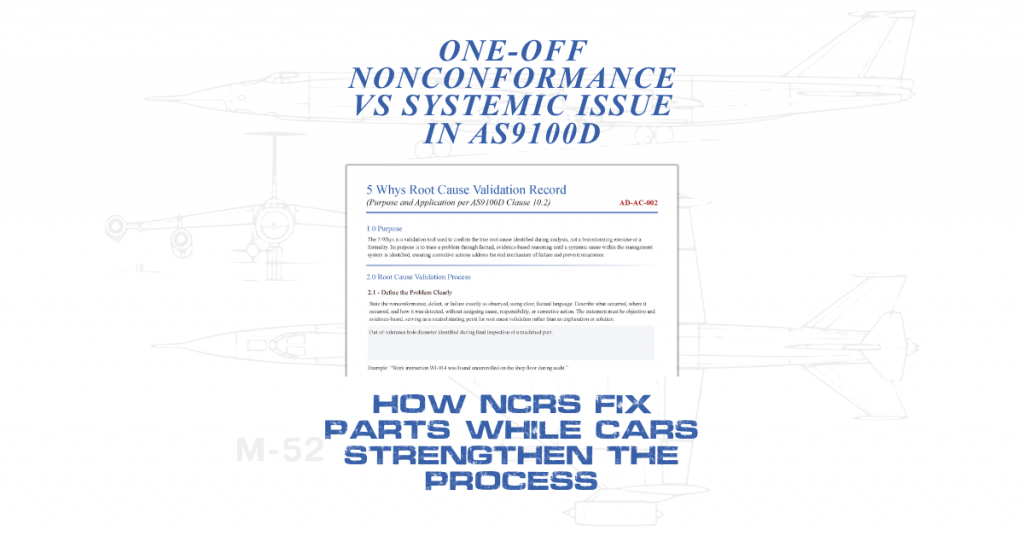
When to Record an NCR vs Initiate Corrective Action Understanding the difference between a single nonconforming part and a systemic issue is critical for maintaining compliance with AS9100D (NCR vs CAR AS9100D). Misclassification leads to repeat defects, weak responses, and audit findings tied to clause 10.2. What Is a One-Off Nonconformance Definition and Scope A […]

AS9100 Clauses List Explained Clear Breakdown of Clauses 4–10

AS9100 Clauses List Explained Clear Breakdown of Clauses 4–10

Introduction The AS9100 clauses list defines the structure of an aerospace quality management system. Clauses 4 through 10 contain all auditable requirements. Understanding how these clauses interact improves implementation, audit readiness, and long-term system effectiveness. AS9100 clauses list overview AS9100D follows the ISO high-level structure. Clauses 0–3 provide scope, references, and definitions but do not […]

AS9100D Corrective Action (Clause 10.2): Requirements, Implementation, and Audit Evidence

AS9100D Corrective Action (Clause 10.2): Requirements, Implementation, and Audit Evidence

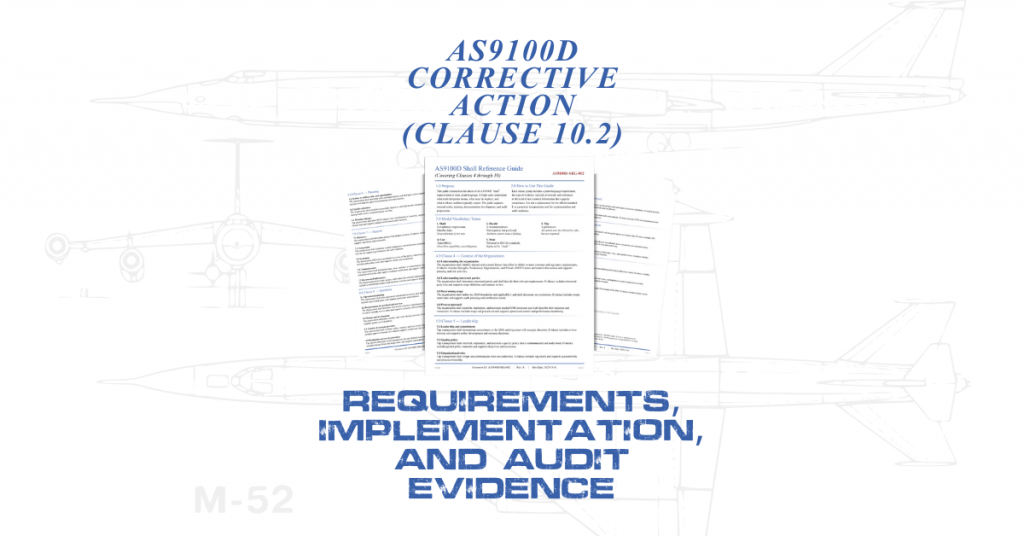
How Clause 10.2 Works in Real Aerospace Systems Corrective action under AS9100D Clause 10.2 is one of the most scrutinized and most misunderstood areas of the aerospace quality management system. Many organizations assume compliance because a form or spreadsheet exists. Auditors expect evidence problems are understood, addressed at the correct level, and prevented from recurring. […]

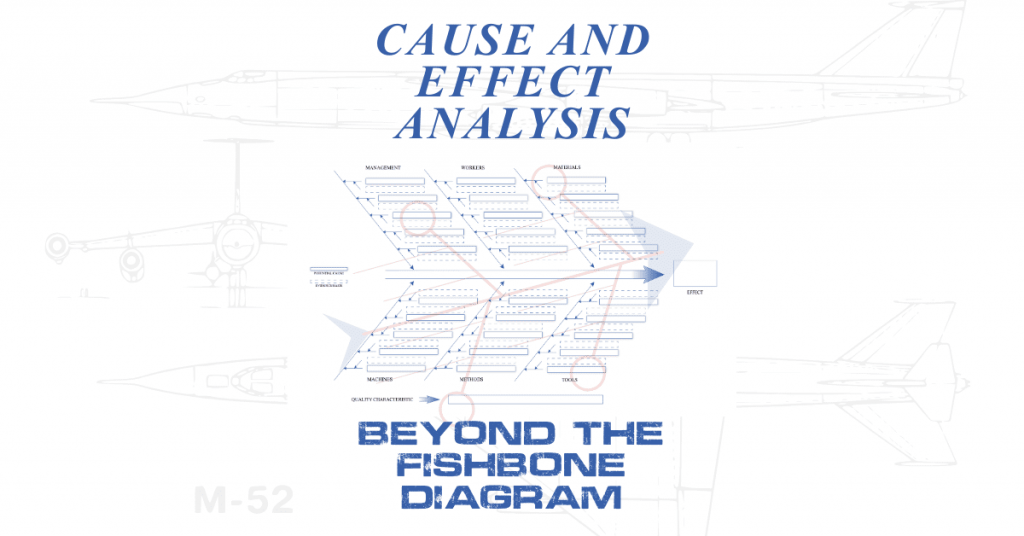
Cause and Effect Analysis: Beyond the Fishbone Diagram

Cause and Effect Analysis: Beyond the Fishbone Diagram

Cause and effect analysis is one of the most widely recognized methods used in quality management to understand why problems occur. Commonly associated with the Ishikawa or fishbone diagram, the method provides a structured way to examine how multiple factors may contribute to an undesired outcome. Despite its familiarity, the method is often applied superficially. […]