Root Cause Analysis: A Practical Guide for Manufacturing and Quality Professionals

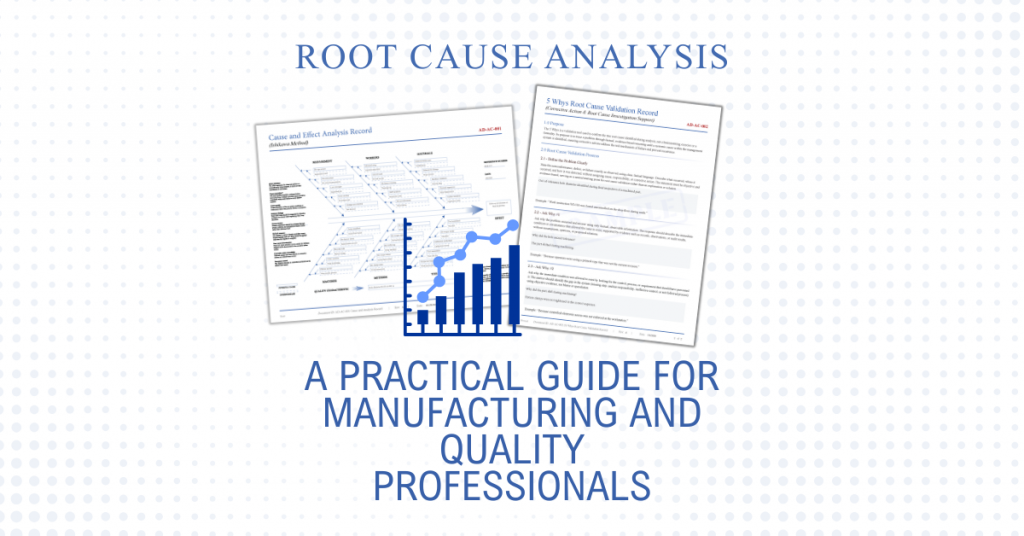
Root Cause Analysis: A Practical Guide for Manufacturing and Quality Professionals

Root cause analysis (RCA) is one of the most valuable problem-solving methods used throughout manufacturing, aerospace, defense, healthcare, construction, and countless other industries. When performed correctly, it helps organizations eliminate recurring problems rather than repeatedly correcting the same symptoms. Many organizations respond to nonconformances by replacing damaged parts, retraining an employee, or issuing a corrective […]
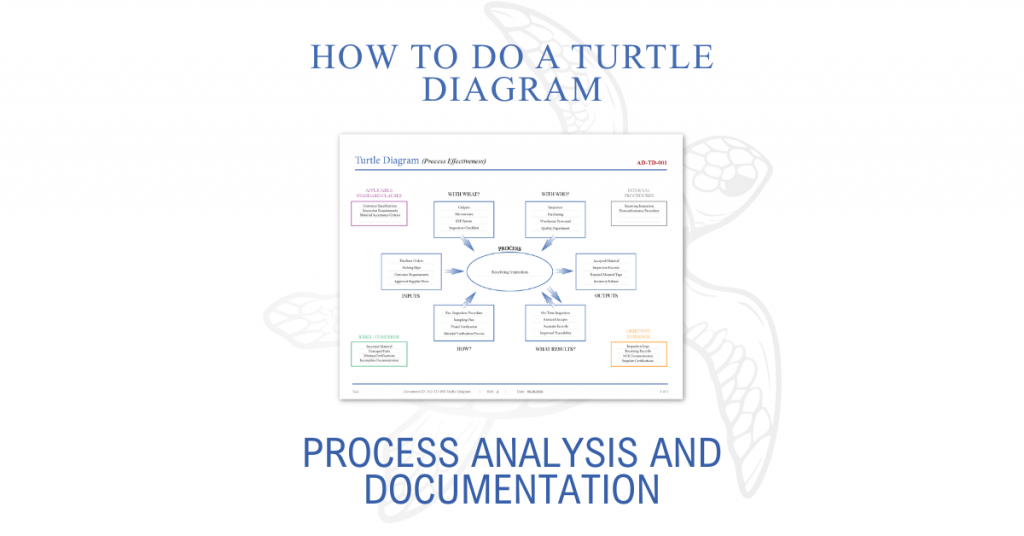
How to Do a Turtle Diagram for Process Analysis and Documentation

How to Do a Turtle Diagram for Process Analysis and Documentation

Creating a turtle diagram begins by identifying a specific process within your quality management system or operational workflow. The objective is to visually define how the process functions, what resources and controls support it, who is responsible for performing it, and how process effectiveness is measured through results, metrics, and performance indicators. A well-developed turtle […]

What Is a Turtle Diagram Used For in Process Management?

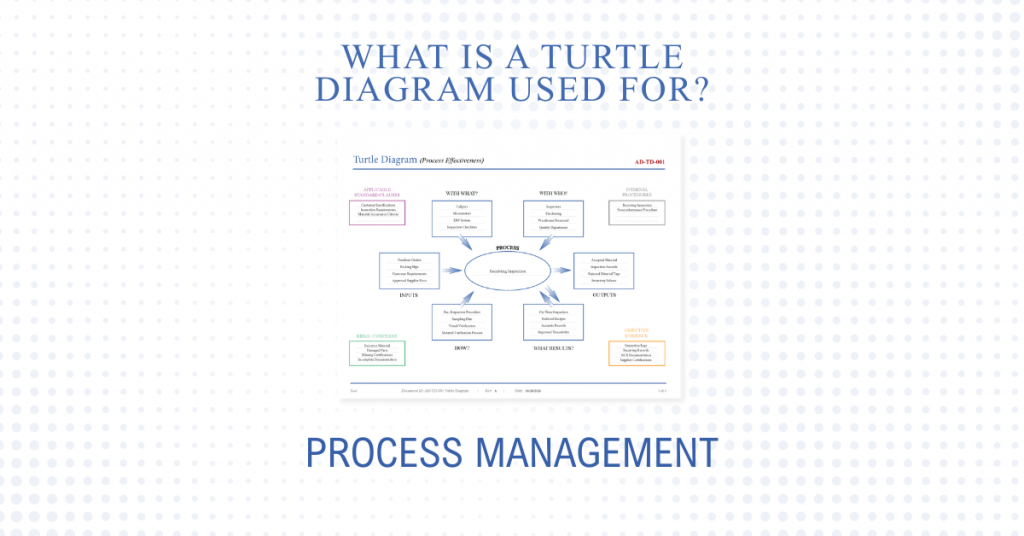
What Is a Turtle Diagram Used For in Process Management?

A turtle diagram is used to visually define and evaluate a process within a quality management system. It helps organizations identify process inputs, outputs, resources, responsibilities, controls, methods, and performance measurements in a structured format. In AS9100 and ISO 9001 environments, turtle diagrams are commonly used during: Rather than describing a process only through procedures, […]

AS9100D Internal Audit Risks – Neglecting Internal Audits Before Surveillance or Recertification Audits

AS9100D Internal Audit Risks – Neglecting Internal Audits Before Surveillance or Recertification Audits

AS9100D internal audit risks, surveillance audit findings, certification suspension concerns, ineffective aerospace audit programs, and systemic quality management breakdowns can rapidly escalate when organizations fail to maintain active, process-based internal audit activities throughout the certification cycle. Organizations operating within certified AS9100D environments are expected to maintain a functioning internal audit program capable of evaluating process […]

Cause and Effect Analysis: Beyond the Fishbone Diagram

Cause and Effect Analysis: Beyond the Fishbone Diagram

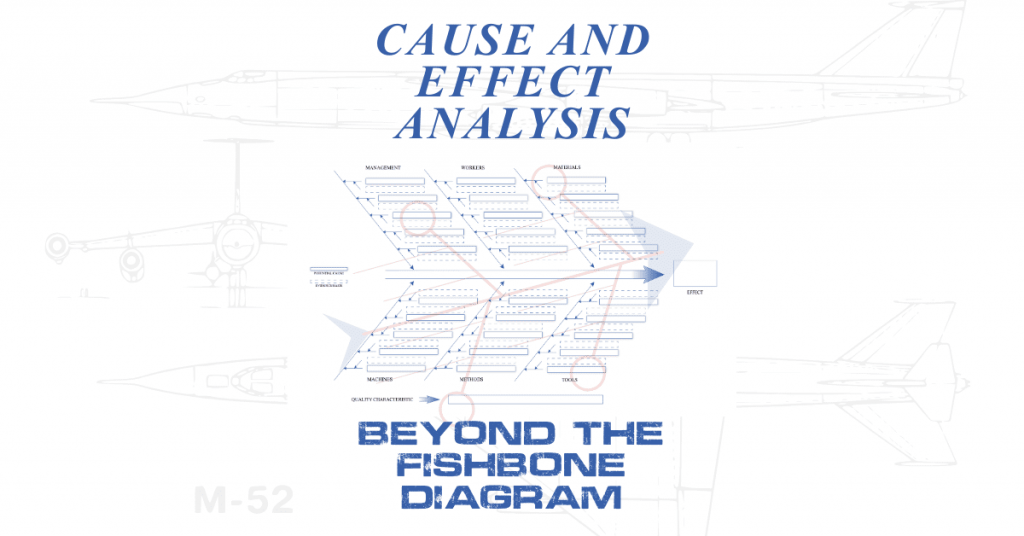
Cause and effect analysis is one of the most widely recognized methods used in quality management to understand why problems occur. Commonly associated with the Ishikawa or fishbone diagram, the method provides a structured way to examine how multiple factors may contribute to an undesired outcome. Despite its familiarity, the method is often applied superficially. […]

AS9100D Internal Audit Sampling: How Much Evidence Is Enough?

AS9100D Internal Audit Sampling: How Much Evidence Is Enough?

Understanding Sample Size in AS9100D Internal Audits AS9100D does not dictate how many records, parts, or transactions to sample during an internal audit. Instead, auditors must select a size sufficient to achieve audit objectives while considering process risk, past performance, and available evidence. The goal is to gather enough objective evidence to confirm conformity or […]

Common AS9100D Documentation Errors and How to Avoid Them

Common AS9100D Documentation Errors and How to Avoid Them

Why these errors persist Complexity grows as teams add forms and procedures. Without strict ownership and a single source of truth, outdated files linger, copies spread, and approvals go missing. Frequent AS9100D documentation errors Obsolete copies in active foldersInternal audits often find old forms inside live work areas. Users grab what is closest rather than […]

AS9100D Requirements and Certification: From Gap Assessment to Audit-Ready

AS9100D Requirements and Certification: From Gap Assessment to Audit-Ready

Steps to AS9100 Certification (That Actually Work in the Real World) For aerospace and defense suppliers, achieving AS9100 certification isn’t just a checkbox, it’s a business requirement. Whether you’re bidding on government contracts or supplying major OEMs, certification under AS9100 demonstrates that your organization can meet the stringent demands of the aerospace industry. But what […]

Counterfeit Parts in Aerospace: The Growing Threat Undermining Supply Chain Integrity and Mission Safety

Counterfeit Parts in Aerospace: The Growing Threat Undermining Supply Chain Integrity and Mission Safety

Counterfeit parts in aerospace are no longer a theoretical risk—they’re an active and escalating threat that undermines aircraft reliability, operator safety, and national defense capabilities. The FAA estimates that approximately 520,000 counterfeit or unapproved parts enter aircraft annually—roughly 2% of installed components (connectorsupplier.com). These components, which range from semiconductors and fasteners to composite structures and […]

AS9100 Internal Audit Process: What You Need to Know for Aerospace QMS Compliance

AS9100 Internal Audit Process: What You Need to Know for Aerospace QMS Compliance

Step-by-Step: AS9100 Internal Audit Process 1. Audit Planning Sample sizing ensures auditors collect enough objective evidence to draw valid conclusions about process performance. AS9100D doesn’t specify a fixed number of records—it requires a risk-based approach. Higher-risk processes demand deeper review and direct observation, while stable, low-risk areas can rely on smaller samples. 2. Preparing the […]