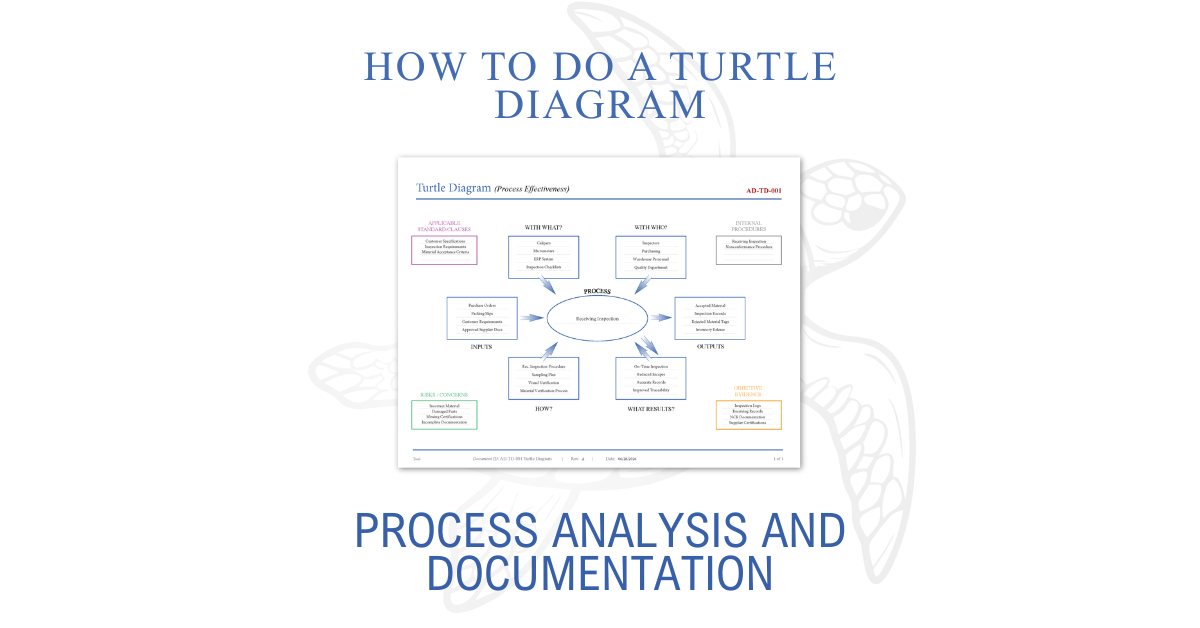
Creating a turtle diagram begins by identifying a specific process within your quality management system or operational workflow. The objective is to visually define how the process functions, what resources and controls support it, who is responsible for performing it, and how process effectiveness is measured through results, metrics, and performance indicators. A well-developed turtle diagram helps organizations better understand process interactions, improve consistency, and support more effective auditing and process evaluation activities.
Step 1: Define the Process
Place the process name in the center of the diagram. Examples may include:
- Receiving Inspection
- Purchasing
- Calibration
- Contract Review
- Corrective Action
Step 2: Identify Inputs
Determine what enters the process, such as:
- Customer requirements
- Purchase orders
- Drawings
- Materials
- Data
Step 3: Identify Outputs
Define what the process produces:
- Approved product
- Inspection reports
- Completed documentation
- Nonconformance records
- Delivered services
Step 4: Define “With What?”
List equipment, software, infrastructure, and supporting resources required to perform the process.
Step 5: Define “With Whom?”
Identify personnel, competencies, certifications, and responsible roles associated with the process.
Step 6: Define “How?”
Reference procedures, work instructions, specifications, standards, and methods controlling the process.
Step 7: Define Metrics and Results
Include measurable indicators used to evaluate effectiveness, such as:
- On-time delivery
- Scrap rate
- Audit findings
- First pass yield
- Customer complaints
A strong turtle diagram should clearly connect process controls to measurable outcomes and process effectiveness.
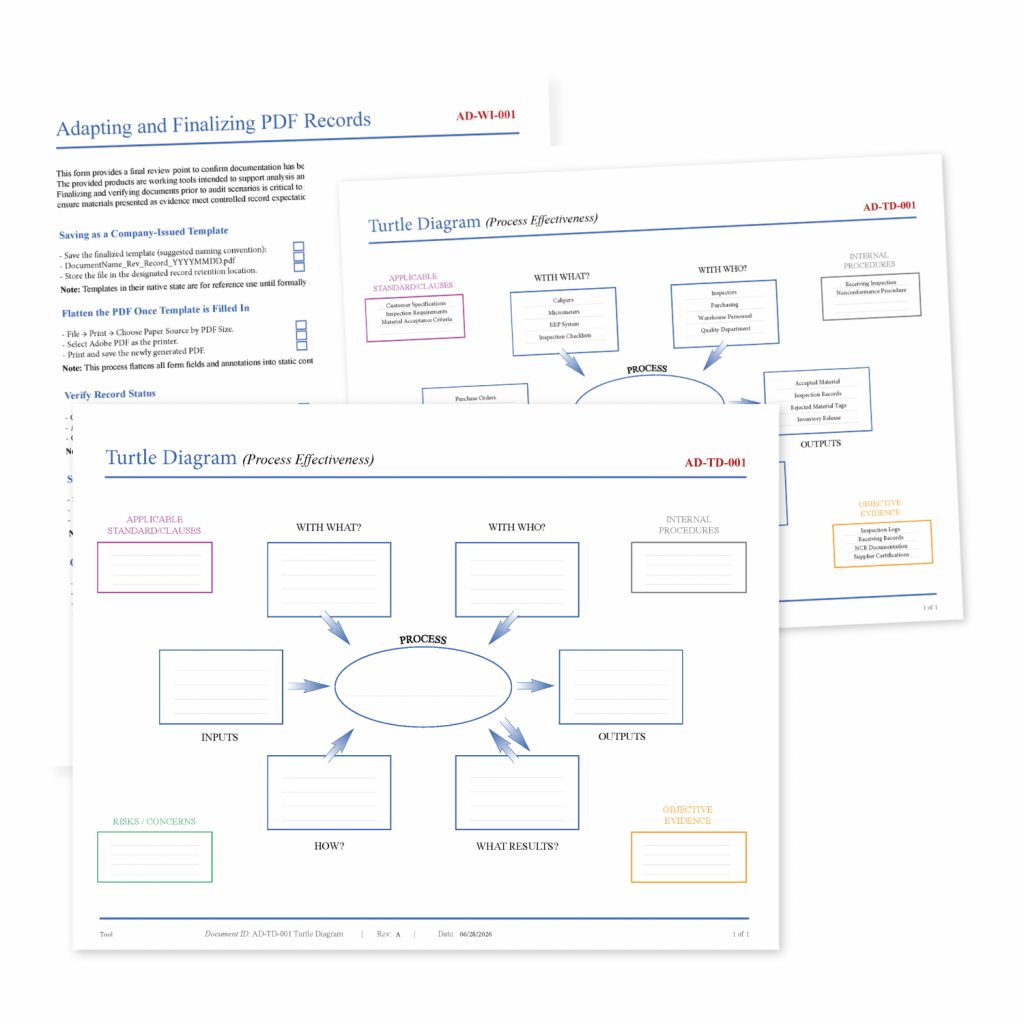
Creating a turtle diagram involves more than filling out sections on a template. A well-developed diagram should clearly define how the process functions, how it is controlled, and how success is measured. Properly structured turtle diagrams can improve process visibility, support audits, and strengthen operational consistency.
After the process information is identified and organized, the turtle diagram is then used as a practical process management and evaluation tool. Organizations use the completed diagram to review whether the process is adequately controlled, whether responsibilities and resources are clearly defined, and whether performance metrics demonstrate effective operation. The turtle diagram can then support internal audits, employee training, management review discussions, process improvement activities, and identification of operational gaps or risks. Rather than remaining only a visual reference, the completed turtle diagram becomes a structured way to evaluate how consistently and effectively the process is functioning over time.