
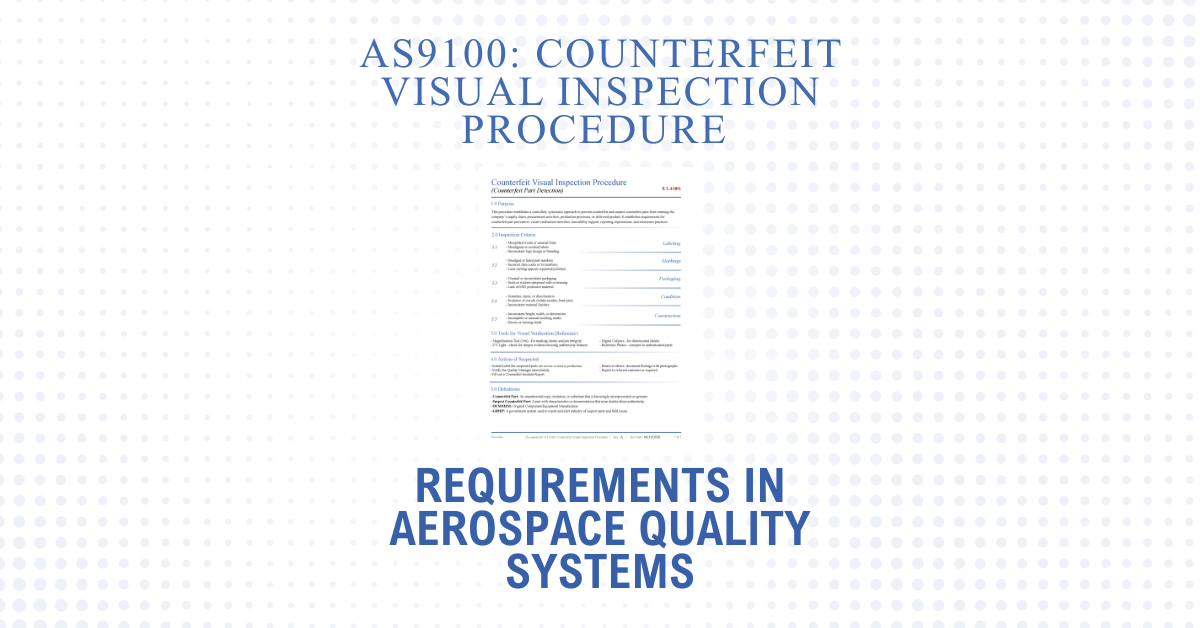
A documented counterfeit visual inspection procedure provides organizations with a controlled framework for identifying suspect indicators during receiving inspection, material handling, stockroom activities, and operational verification processes. Counterfeit and suspect counterfeit parts continue to represent one of the most significant operational and compliance risks within aerospace, defense, and regulated manufacturing environments. As global supply chains expand and procurement pressures increase, organizations are expected to establish structured verification activities capable of identifying material irregularities before product enters production, assembly, or customer delivery processes.
Rather than relying solely on supplier certifications or documentation packages, a procedure helps reinforce supply chain integrity through physical verification and observation-based evaluation methods aligned with AS9100D Clause 8.1.4 expectations.
Why a Counterfeit Visual Inspection Procedure Matters
Counterfeit parts are not always immediately obvious during normal operational handling. Many suspect items enter the supply chain through reused, altered, re-marked, refurbished, or improperly documented components that may initially appear compliant. A counterfeit visual inspection procedure helps organizations establish consistent methods for identifying irregularities before product acceptance or use.
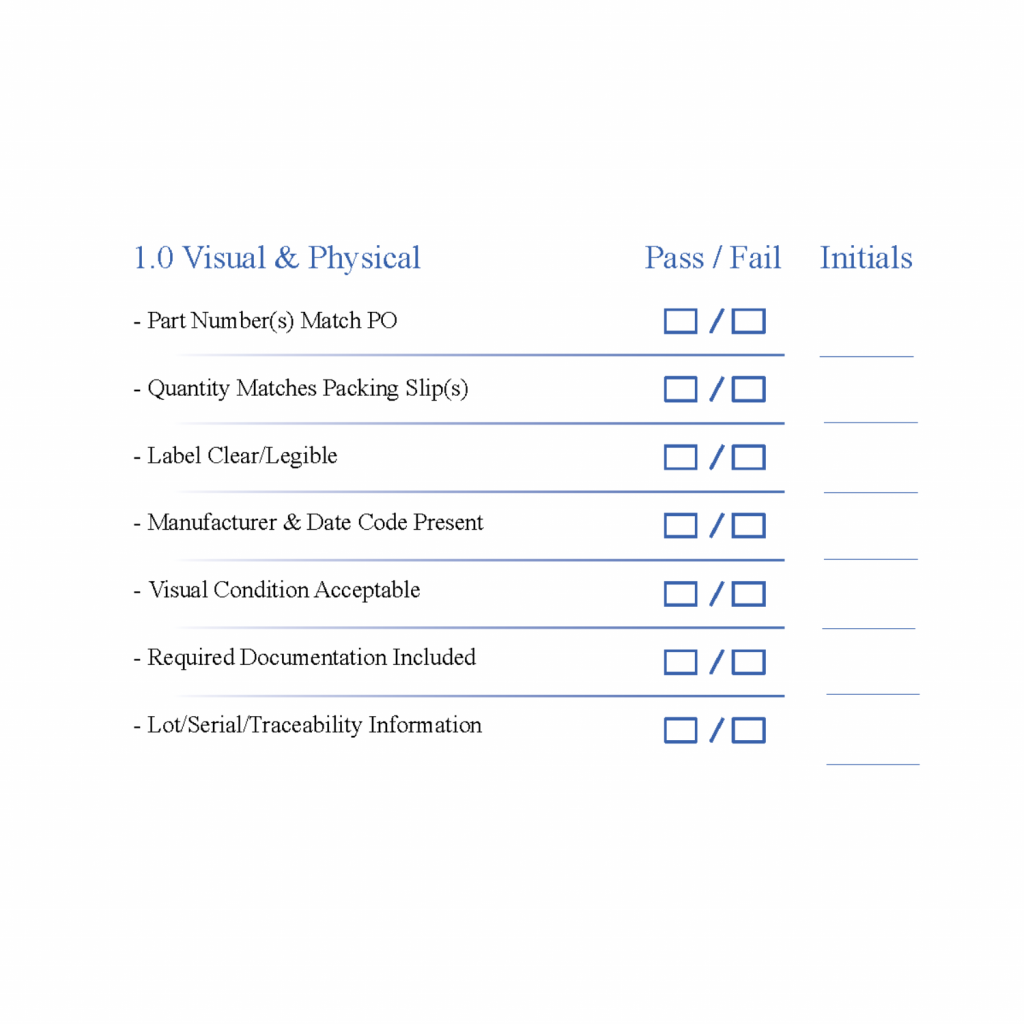
Common indicators evaluated during counterfeit visual inspection activities may include:
• Inconsistent labeling or packaging
• Surface sanding, polishing, or resurfacing evidence
• Incorrect logos, fonts, or manufacturer markings
• Mixed date codes or lot traceability concerns
• Damaged terminals, leads, or coatings
• Repainted surfaces or altered finish conditions
• Missing certificates or incomplete traceability documentation
• Unusual material appearance or workmanship inconsistencies
Without a documented counterfeit visual inspection procedure, these conditions can move deeper into operational processes where containment becomes significantly more difficult and costly.
Supporting AS9100D Compliance Expectations
AS9100D requires organizations to prevent counterfeit or suspect counterfeit parts from entering delivered product through appropriate operational controls, supplier oversight, traceability activities, and awareness programs. Effective counterfeit prevention activities are expected to extend beyond procurement alone and include operational verification throughout receiving, inspection, storage, and production environments.
A structured inspection procedure helps support:
• Clause 8.1.4 counterfeit prevention activities
• Supplier verification and receiving inspection processes
• Material identification and traceability practices
• Operational awareness and employee consistency
• Internal audit readiness and objective evidence support
• Escalation and reporting expectations for suspect material
When properly implemented, a inspection procedure also strengthens communication between quality, purchasing, inspection, and production personnel by establishing clear expectations for identifying and documenting suspect conditions.
Operational Benefits Beyond Compliance
While counterfeit prevention procedures are often developed to satisfy compliance expectations, their operational value extends significantly beyond certification support. Aerospace manufacturers frequently operate within compressed delivery schedules, limited supplier availability conditions, and high-reliability environments where even minor material concerns can create substantial downstream risk.
A counterfeit visual inspection procedure helps organizations:
• Reduce acceptance of nonconforming or suspect material
• Improve consistency between inspectors and receiving personnel
• Strengthen supplier accountability and verification activities
• Improve documentation consistency during investigations
• Support containment and root cause analysis activities
• Reduce operational disruption associated with suspect components
Organizations with inconsistent inspection practices often experience recurring supplier issues, fragmented documentation, incomplete escalation processes, and increased audit findings tied to material control weaknesses.
Building Consistent Inspection Practices
One of the most important functions of a counterfeit visual inspection procedure is standardization. Without defined guidance, inspection activities frequently become dependent on individual experience levels, informal tribal knowledge, or inconsistent judgment between personnel.
A controlled inspection procedure helps establish:
• Standard inspection criteria
• Defined escalation pathways
• Documentation requirements
• Visual inspection guidance examples
• Reporting expectations
• Traceability support practices
• Training and awareness alignment
This consistency becomes especially important during audits, customer reviews, supplier disputes, and internal investigations where objective evidence and repeatable inspection practices are expected.
AssessmentDrive® Counterfeit Visual Inspection Procedure
The AssessmentDrive® Counterfeit Visual Inspection Procedure was developed to support structured counterfeit prevention activities within aerospace and regulated manufacturing environments. The procedure is designed to provide organizations with a professionally formatted framework supporting operational consistency, inspection guidance, traceability awareness, and controlled verification practices aligned with AS9100D-focused environments.
This procedure supports receiving inspection activities, suspect counterfeit awareness, material verification processes, and operational inspection consistency through a structured, audit-conscious format intended for practical implementation use.
Organizations preparing for internal audits, surveillance activities, customer reviews, or broader counterfeit prevention initiatives benefit from implementing a visual inspection procedure before material risks evolve into larger operational or compliance failures.
Final Considerations
Counterfeit prevention is not solely a procurement concern. Effective prevention requires coordinated operational controls supported by documented procedures, consistent inspection methods, traceability awareness, supplier oversight, and employee understanding across multiple departments.
A counterfeit visual inspection procedure provides a practical frontline defense against suspect material entering production and helps organizations strengthen both operational discipline and audit readiness. In aerospace and defense environments where reliability, traceability, and product integrity remain critical, structured counterfeit verification activities continue to represent an essential component of an effective quality management system.