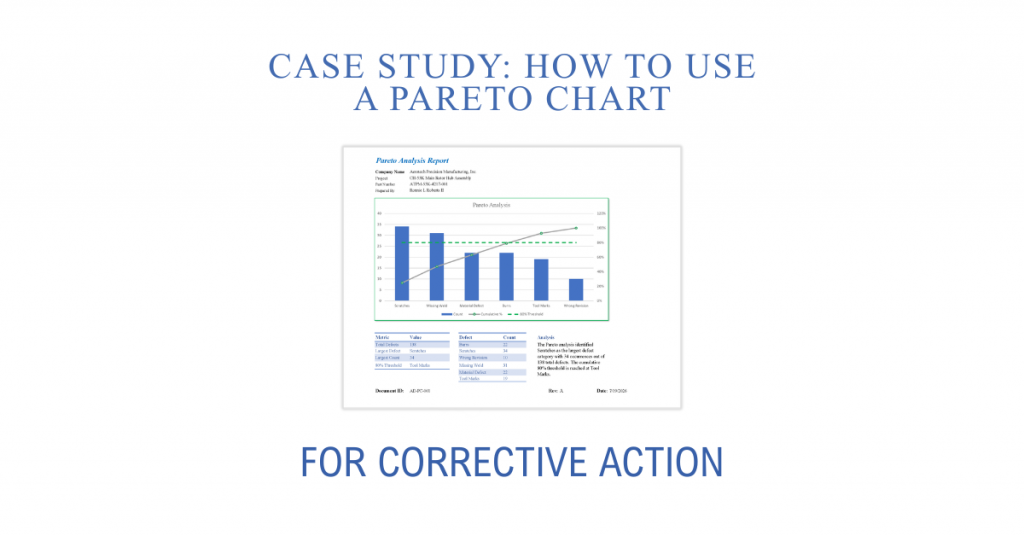
Case Study: How to Use a Pareto Chart for Corrective Action

Case Study: How to Use a Pareto Chart for Corrective Action

Corrective Actions Should Begin with Data, Not Assumptions When quality issues occur repeatedly, the immediate response is often to investigate the most recent failure. While this may resolve an isolated event, it does not always address the defects having the greatest impact on quality, cost, or customer satisfaction. A Pareto chart provides a structured method […]
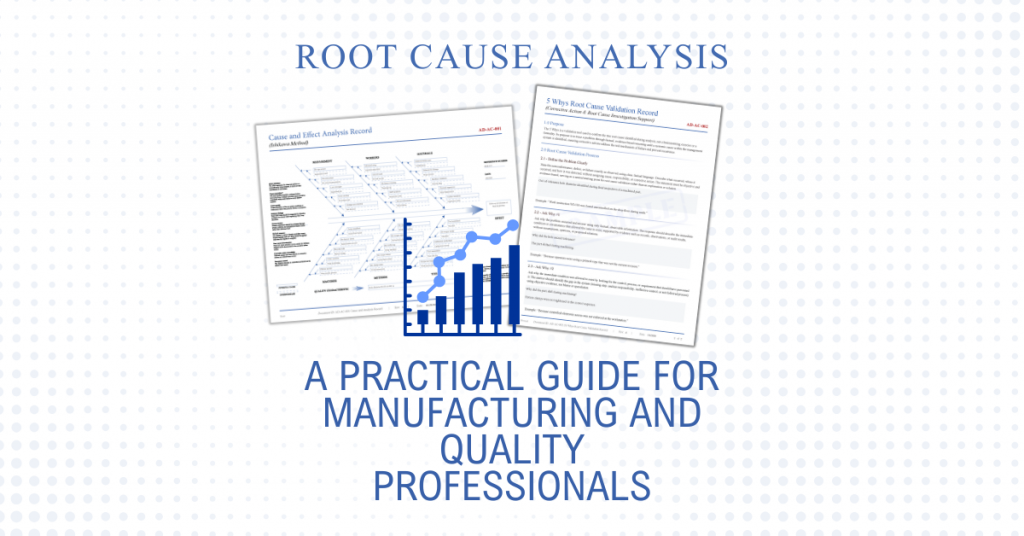
Root Cause Analysis: A Practical Guide for Manufacturing and Quality Professionals

Root Cause Analysis: A Practical Guide for Manufacturing and Quality Professionals

Root cause analysis (RCA) is one of the most valuable problem-solving methods used throughout manufacturing, aerospace, defense, healthcare, construction, and countless other industries. When performed correctly, it helps organizations eliminate recurring problems rather than repeatedly correcting the same symptoms. Many organizations respond to nonconformances by replacing damaged parts, retraining an employee, or issuing a corrective […]

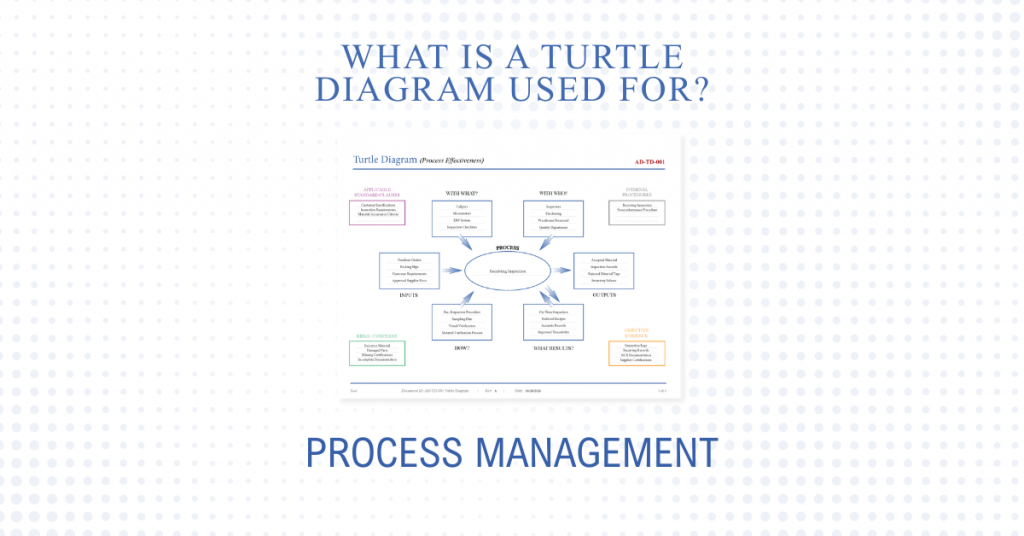
What Is a Turtle Diagram Used For in Process Management?

What Is a Turtle Diagram Used For in Process Management?

A turtle diagram is used to visually define and evaluate a process within a quality management system. It helps organizations identify process inputs, outputs, resources, responsibilities, controls, methods, and performance measurements in a structured format. In AS9100 and ISO 9001 environments, turtle diagrams are commonly used during: Rather than describing a process only through procedures, […]

AS9100D Internal Audit Risks – Neglecting Internal Audits Before Surveillance or Recertification Audits

AS9100D Internal Audit Risks – Neglecting Internal Audits Before Surveillance or Recertification Audits

AS9100D internal audit risks, surveillance audit findings, certification suspension concerns, ineffective aerospace audit programs, and systemic quality management breakdowns can rapidly escalate when organizations fail to maintain active, process-based internal audit activities throughout the certification cycle. Organizations operating within certified AS9100D environments are expected to maintain a functioning internal audit program capable of evaluating process […]

Common AS9100 Internal Audit Findings: When Audit Preparation Becomes Reactive

Common AS9100 Internal Audit Findings: When Audit Preparation Becomes Reactive

Many aerospace organizations struggle with common AS9100 internal audit findings because audit preparation is treated as a temporary event instead of part of a continuously operating quality management system. Procedures are updated days before the audit, records are rushed into completion, and corrective actions suddenly become urgent only when an external auditor is approaching. While […]

AS9100D Clause Crosswalk: How the Requirements Connect Across Your Quality Management System

AS9100D Clause Crosswalk: How the Requirements Connect Across Your Quality Management System

Understanding the AS9100D Clause Crosswalk Many organizations implement AS9100D by focusing on individual clauses one at a time. While this approach can help establish compliance, it often overlooks how the requirements interact throughout the quality management system (QMS). This is where a AS9100D clause crosswalk can assist. AS9100D was designed as an integrated management system […]

AS9100: Building a Quality Management System That Supports Aerospace Growth

AS9100: Building a Quality Management System That Supports Aerospace Growth

For aerospace manufacturers and suppliers, AS9100 is more than a certification requirement. It is a framework designed to improve product quality, reduce risk, strengthen customer confidence, and create consistent business processes across an organization. Based on ISO 9001, AS9100 adds aerospace-specific requirements focused on operational control, risk management, configuration management, product safety, counterfeit parts prevention, […]

What Not to Tell an Auditor During an AS9100 Audit

What Not to Tell an Auditor During an AS9100 Audit

Introduction What not to tell an auditor during an AS9100 audit is rarely covered in training yet frequently causes avoidable findings. Auditors assess objective evidence and system effectiveness, but how information is presented can expand scope, trigger deeper sampling, or create unnecessary risk. Why wording matters during an AS9100 audit Auditors follow trails. Casual statements, […]

AS9100 Clauses List Explained Clear Breakdown of Clauses 4–10

AS9100 Clauses List Explained Clear Breakdown of Clauses 4–10

Introduction The AS9100 clauses list defines the structure of an aerospace quality management system. Clauses 4 through 10 contain all auditable requirements. Understanding how these clauses interact improves implementation, audit readiness, and long-term system effectiveness. AS9100 clauses list overview AS9100D follows the ISO high-level structure. Clauses 0–3 provide scope, references, and definitions but do not […]

Do You Have to Answer an AS9100 Audit OFI?

Do You Have to Answer an AS9100 Audit OFI?

During an AS9100 audit, organizations often receive OFIs, or Opportunities for Improvement. These can cause confusion because they appear in audit reports alongside nonconformities but carry a very different meaning and obligation. The short answer is no. You are not required to formally answer or close an OFI in the same way as a nonconformity. […]