Common AS9100 Internal Audit Findings: When Audit Preparation Becomes Reactive

Common AS9100 Internal Audit Findings: When Audit Preparation Becomes Reactive

Many aerospace organizations struggle with common AS9100 internal audit findings because audit preparation is treated as a temporary event instead of part of a continuously operating quality management system. Procedures are updated days before the audit, records are rushed into completion, and corrective actions suddenly become urgent only when an external auditor is approaching. While […]
AS9100 Clauses List Explained Clear Breakdown of Clauses 4–10

AS9100 Clauses List Explained Clear Breakdown of Clauses 4–10

Introduction The AS9100 clauses list defines the structure of an aerospace quality management system. Clauses 4 through 10 contain all auditable requirements. Understanding how these clauses interact improves implementation, audit readiness, and long-term system effectiveness. AS9100 clauses list overview AS9100D follows the ISO high-level structure. Clauses 0–3 provide scope, references, and definitions but do not […]

AS9100 Audit Finding Write-Ups: How to Document Clear, Effective Findings

AS9100 Audit Finding Write-Ups: How to Document Clear, Effective Findings

Writing clean, accurate, and actionable AS9100 audit finding write-ups is essential for internal audits, supplier assessments, and external certification audits. Poorly written findings lead to confusion, weak corrective actions, and repeat issues. Strong write-ups provide clarity, traceability, and a direct path to effective correction. This guide explains how to structure AS9100 findings and includes detailed […]

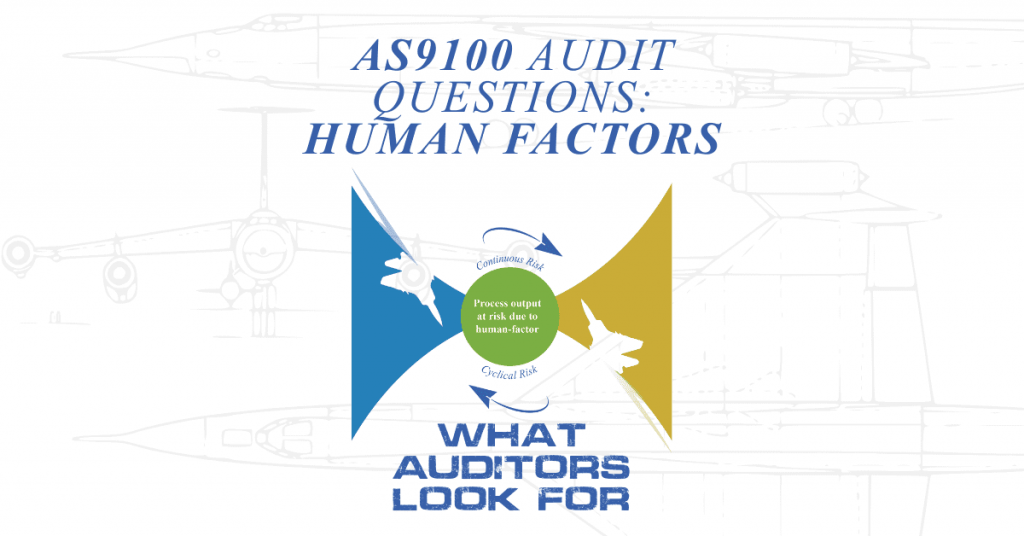
AS9100 Audit Questions for Human Factors: What Auditors Look For and How to Prepare

AS9100 Audit Questions for Human Factors: What Auditors Look For and How to Prepare

Human factors is one of the most underestimated parts of an AS9100 audit, yet it influences every process tied to quality, safety, and conformity. When auditors reference human factors, they look for evidence that an organization has considered how people’s behavior, workload, environment, skills, communication, and fatigue can influence product quality or service performance. Under […]