How Clause 10.2 Works in Real Aerospace Systems
Corrective action under AS9100D Clause 10.2 is one of the most scrutinized and most misunderstood areas of the aerospace quality management system. Many organizations assume compliance because a form or spreadsheet exists. Auditors expect evidence problems are understood, addressed at the correct level, and prevented from recurring.
This guide explains AS9100D corrective action as it is applied in operational aerospace environments, not as a theoretical checklist.
What AS9100D Means by Corrective Action
Corrective action is not the same as fixing a problem.
AS9100D requires organizations to eliminate the cause of a nonconformity, not only its immediate effect. Rework, inspection, repair, or disposition alone does not satisfy Clause 10.2. Those actions are corrections. Corrective action begins when the organization determines why the nonconformity occurred and what must change to prevent recurrence.
Clause 10.2 applies to:
• Product nonconformities
• Process failures
• System weaknesses
• Audit findings
• Customer complaints
• Supplier issues
If a failure exposes a weakness in system control, corrective action is required.
Intent of Clause 10.2
The intent of AS9100D corrective action is system stability and control.
Auditors expect to see:
• Problems evaluated consistently
• Root causes determined logically
• Actions aligned with risk and impact
• Effectiveness verified over time
• Lessons learned reflected in planning
Corrective action links improvement, risk-based thinking, and management review.
Correction vs Corrective Action
This distinction is critical during audits.
Correction
Immediate action taken to address a detected nonconformity.
Examples include:
• Rework
• Repair
• Scrap
• Product segregation
• Containment actions
Corrective Action
Action taken to eliminate the cause of the nonconformity and prevent recurrence.
Examples include:
• Process changes
• Control revisions
• Training updates tied to root cause
• Supplier controls
• Procedural changes
Audit findings often occur when organizations stop at correction and never progress to corrective action.
The AS9100D Corrective Action Process
A compliant corrective action process is structured and repeatable. While formats vary, auditors expect the same logical sequence.
Identification of Nonconformity
The organization must clearly document:
• What failed
• Where it failed
• When it occurred
• Which requirement was not met
Vague problem statements weaken the entire corrective action.
Immediate Control and Containment
Before root cause analysis begins, the organization must demonstrate control of the situation to prevent further impact.
Containment may include:
• Product segregation
• Temporary process changes
• Additional inspections
• Supplier holds
Containment supports corrective action but does not replace it.
Evaluation of Need for Corrective Action
Not every nonconformity requires the same depth of response. AS9100D allows scaling based on:
• Severity
• Frequency
• Risk
• Impact on conformity or safety
This evaluation must be intentional and defensible.
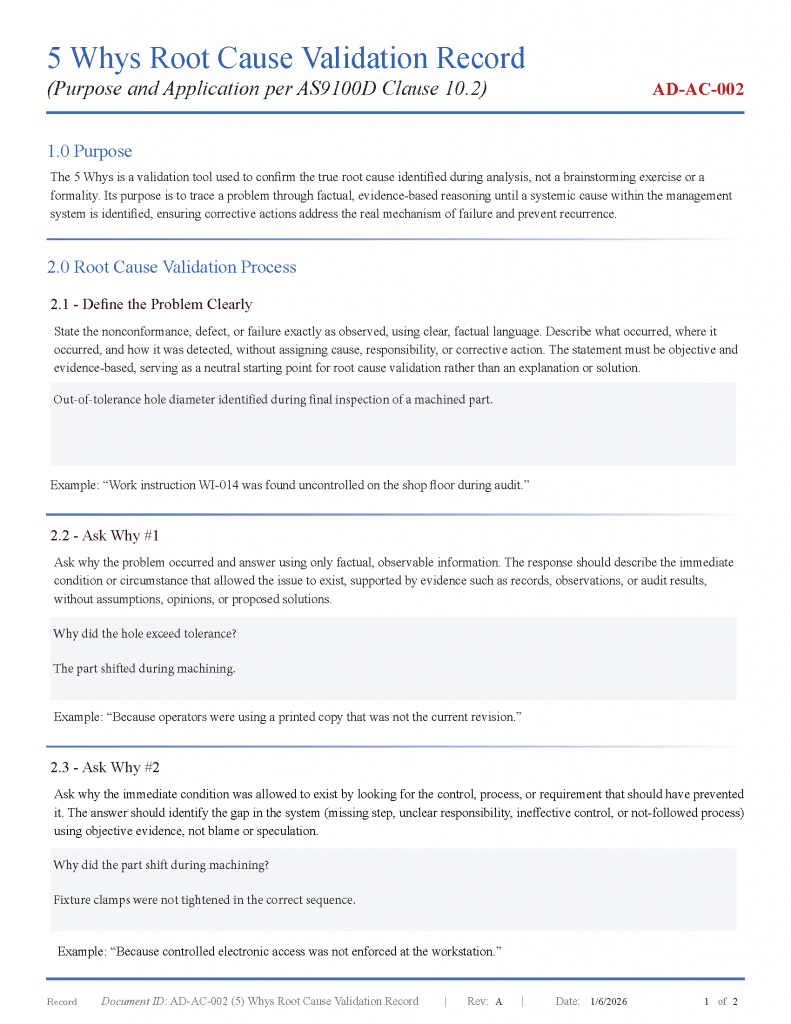
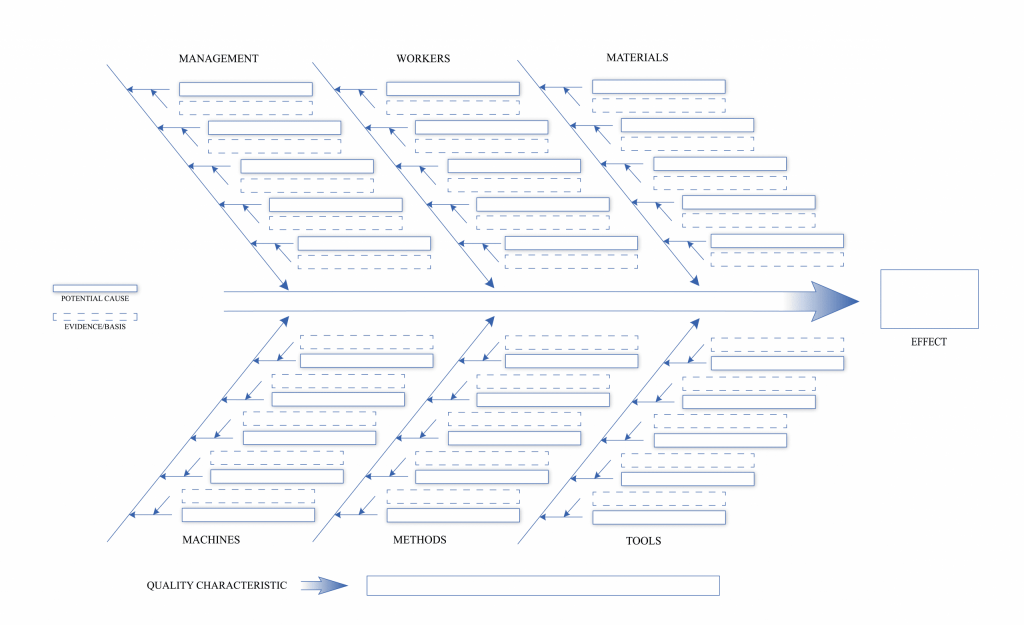
Root Cause Analysis
Root cause analysis is the most common failure point.
Auditors expect:
• A logical method
• Evidence the method was applied
• A cause explaining recurrence, not symptoms
Acceptable methods include structured questioning, cause-and-effect analysis, or equivalent systematic approaches. The reasoning matters more than the tool.
A corrective action addressing symptoms will fail effectiveness review.
Corrective Action Planning
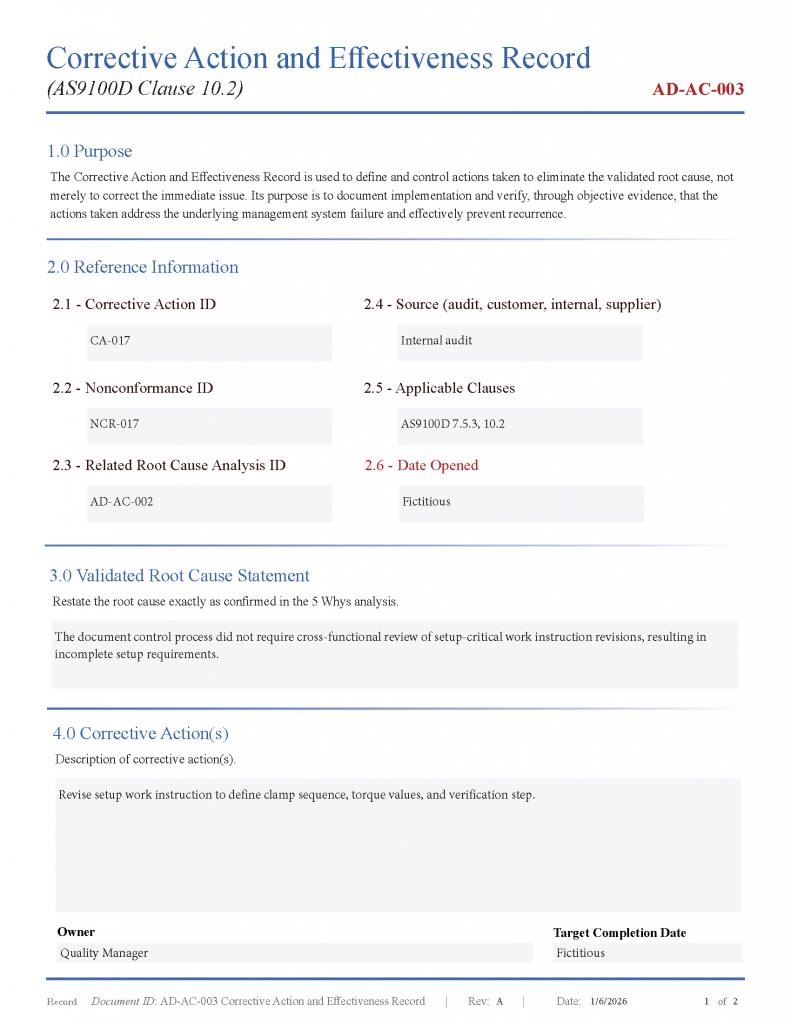
Corrective actions must:
• Address the identified root cause
• Be assigned to responsible owners
• Include defined completion targets
Actions should be specific and measurable. Generic statements such as retrain personnel or review procedure rarely satisfy auditors on their own.
Implementation of Actions
Auditors expect evidence actions were implemented as planned.
This may include:
• Revised procedures
• Updated training records
• Process or control changes
• Supplier corrective actions
Implementation evidence must align directly with the planned actions.
Verification of Effectiveness
Corrective action is not complete until effectiveness is verified.
This often requires time, monitoring, or trend analysis. Immediate closure without verification is a frequent audit finding.
Verification answers one question:
Has recurrence been prevented
Documented Information Requirements
AS9100D does not mandate a specific form, but it does require documented information showing:
• Nature of the nonconformity
• Actions taken
• Results achieved
• Effectiveness verification
Records must remain legible, controlled, and retained per document control rules.
Corrective Action and Risk-Based Thinking
Clause 10.2 connects directly to risk management.
When corrective actions reveal new risks or confirm existing ones, organizations are expected to:
• Update risk registers where applicable
• Adjust controls
• Reflect changes in planning and review
Auditors increasingly expect visible linkage, especially for repeat or systemic issues.
Supplier Corrective Action
Corrective action extends beyond the organization.
When supplier performance affects conformity, organizations must:
• Define when supplier corrective action is required
• Communicate expectations clearly
• Track responses and effectiveness
Supplier corrective actions remain part of the organization’s QMS.
What Auditors Commonly Look For
Auditors typically focus on:
• Consistency across corrective actions
• Quality of root cause logic
• Evidence of effectiveness
• Management awareness of significant issues
• Escalation of systemic problems
Software tools matter less than system behavior.
Common Corrective Action Pitfalls
Frequent audit issues include:
• Root causes restating the problem
• No linkage between cause and action
• Actions closed without verification
• Overuse of training as a default fix
• No awareness of trends or recurrence
Avoiding these issues significantly reduces audit risk.
Corrective Action as a Management Tool
When implemented correctly, corrective action becomes a leadership asset rather than an administrative burden.
A mature corrective action system:
• Stabilizes processes
• Improves supplier performance
• Reduces repeat findings
• Strengthens audit outcomes
• Supports continual improvement
Clause 10.2 is about control, not paperwork.
Closing Perspective
AS9100D corrective action is one of the clearest indicators of system maturity. Organizations treating it as a checkbox struggle during audits. Organizations treating it as a structured decision-making process demonstrate control, credibility, and confidence.
Clause 10.2 does not demand complexity. It demands discipline, logic, and follow-through.
Ronnie Lee Roberts II has worked in the Department of Defense (DoD) quality environment since 2017, supporting programs at Patuxent River and Webster Field (NAWCAD/NAVAIR). A certified AS9100:2016 Rev D Lead Auditor (2022–2025), he brings deep knowledge of quality management systems, documentation control, and audit readiness across aerospace and defense operations. His background includes hands-on experience inspecting to specification per engineering drawings and customer requirements, verifying process conformity, and maintaining compliance with AS9100D clauses related to documented information, product realization, and risk management.
In addition to audit work, Ronnie has supported QMS development, technical writing, CAD-based documentation, and controlled record structures that ensure traceability and repeatability. He also holds ISO/IEC 20000-1:2018 Lead Auditor (TPECS, 2023) and Certified CMMI® Associate (2025) credentials, supporting CMMI-DEV Level 3 environments. His focus remains on aligning documentation and inspection practices with AS9100D standards to drive measurable quality performance and readiness for customer and regulatory audits.