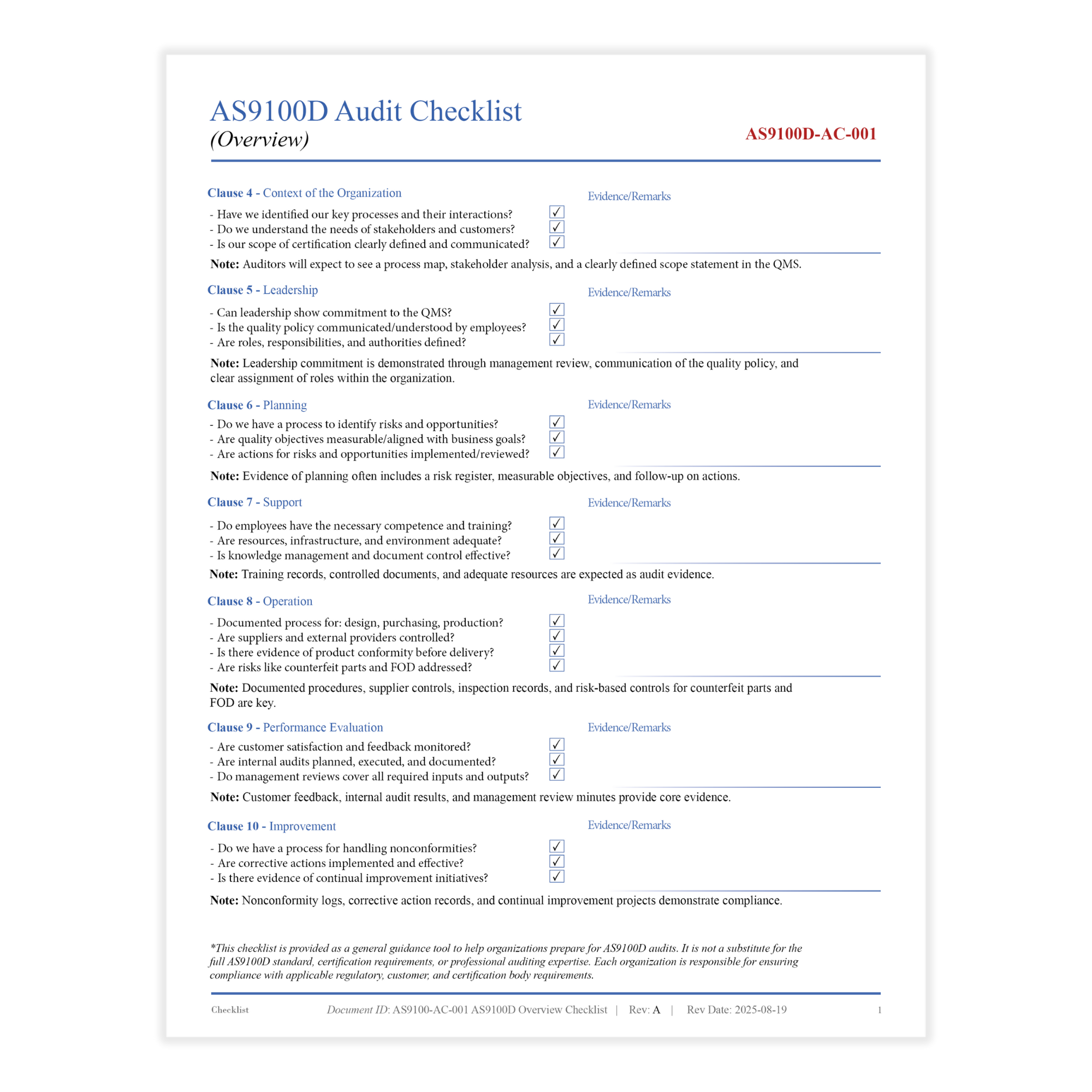
- Clause based checklist covering AS9100D Clauses 4 through 10
- Verification points aligned to shall requirements
- Yes no and notes fields for objective evidence tracking
- Supports internal audits, gap analysis, and pre assessment reviews
- Structured to follow a logical audit sequence
- Aids auditor consistency across functions and programs
- Revision controlled format for documented information
- Designed for repeatable use across audit cycles
- Reference and readiness tool, not a substitute for the AS9100D standard
This AS9100D Audit Checklist Overview provides a concise, auditor ready reference covering Clauses 4 through 10 of the AS9100D standard. It is designed to support internal audits, gap assessments, management reviews, and certification preparation by translating standard requirements into clear, practical verification questions.
The checklist addresses context of the organization, planning, support, operations, performance evaluation, and improvement, with emphasis on leadership commitment, risk based thinking, documented processes, supplier control, product conformity, and continual improvement. Each clause includes focused prompts aligned with typical certification body expectations and common audit evidence.
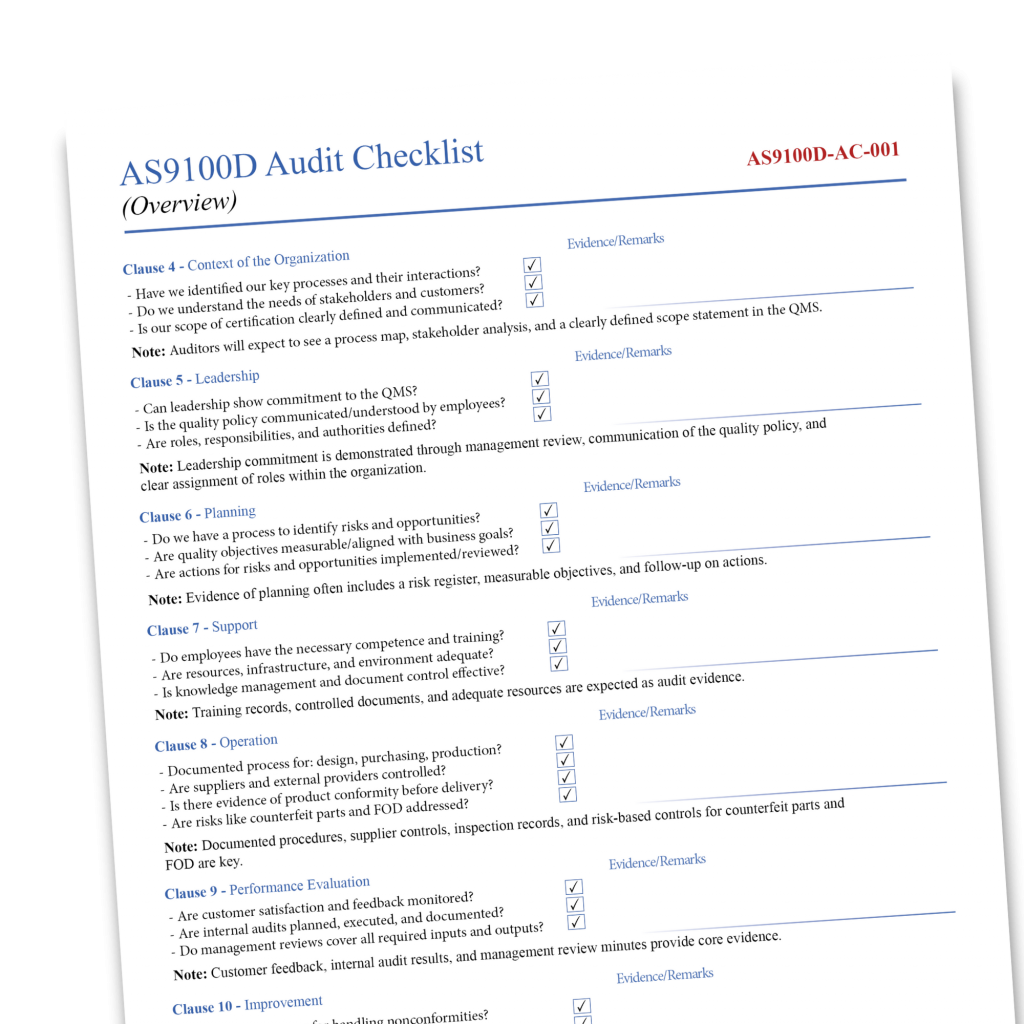
Intended for quality managers, internal auditors, consultants, and small to mid sized aerospace organizations, this document supports efficient audit planning, consistent evaluations, and improved audit traceability across quality management system activities. It is structured to help teams quickly identify gaps, organize objective evidence, and maintain alignment across functions and programs.
It functions as a high level assessment and readiness aid rather than a replacement for the full AS9100D standard, supporting preparation and internal evaluation without substituting certification requirements or registrar guidance.
Delivered as a clean, professional digital checklist suitable for repeat use across audit cycles, it includes clause aligned checkpoints, clearly defined yes no and notes fields, logical sequencing aligned with audit flow, and visible revision identification. The format supports controlled use during internal audits, gap reviews, management preparation, and pre assessment activities, enabling consistent application and traceability over time.