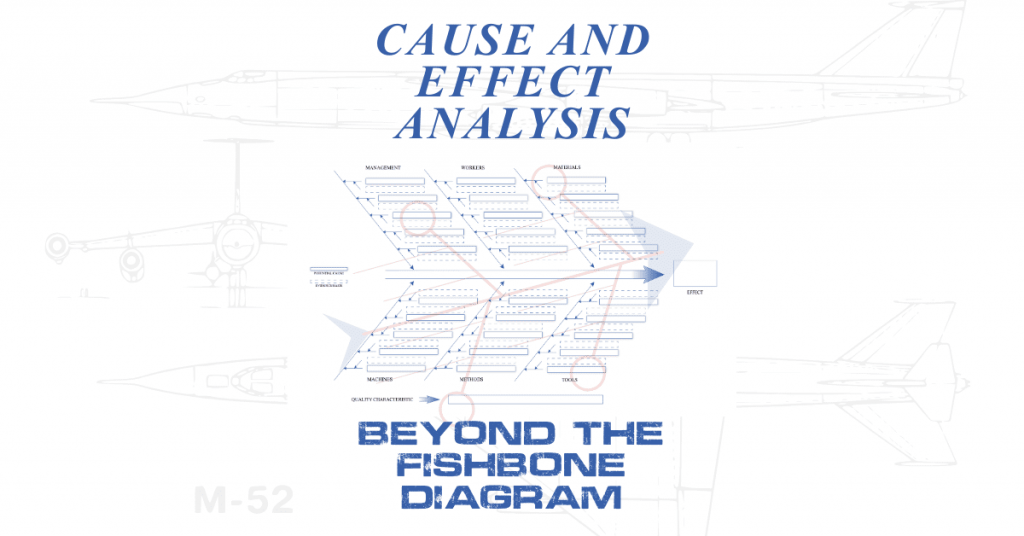
Cause and Effect Analysis: Beyond the Fishbone Diagram

Cause and Effect Analysis: Beyond the Fishbone Diagram

Cause and effect analysis is one of the most widely recognized methods used in quality management to understand why problems occur. Commonly associated with the Ishikawa or fishbone diagram, the method provides a structured way to examine how multiple factors may contribute to an undesired outcome. Despite its familiarity, the method is often applied superficially. […]
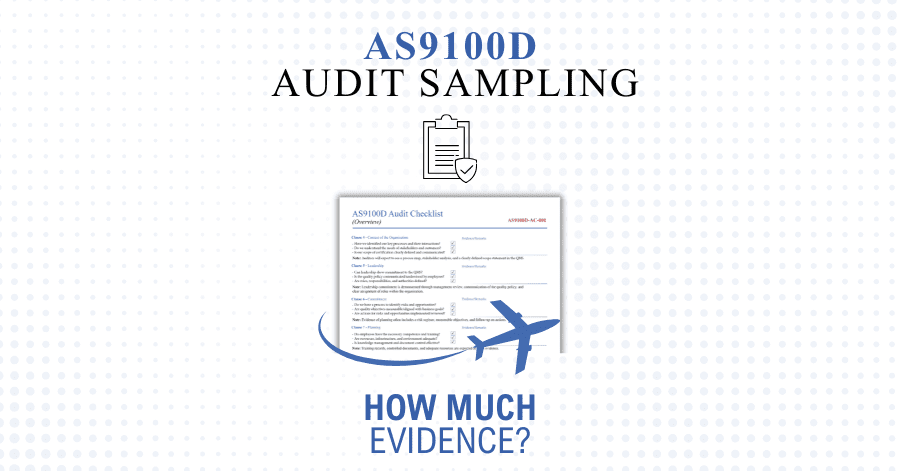
AS9100D Internal Audit Sampling: How Much Evidence Is Enough?

AS9100D Internal Audit Sampling: How Much Evidence Is Enough?

Understanding Sample Size in AS9100D Internal Audits AS9100D does not dictate how many records, parts, or transactions to sample during an internal audit. Instead, auditors must select a size sufficient to achieve audit objectives while considering process risk, past performance, and available evidence. The goal is to gather enough objective evidence to confirm conformity or […]

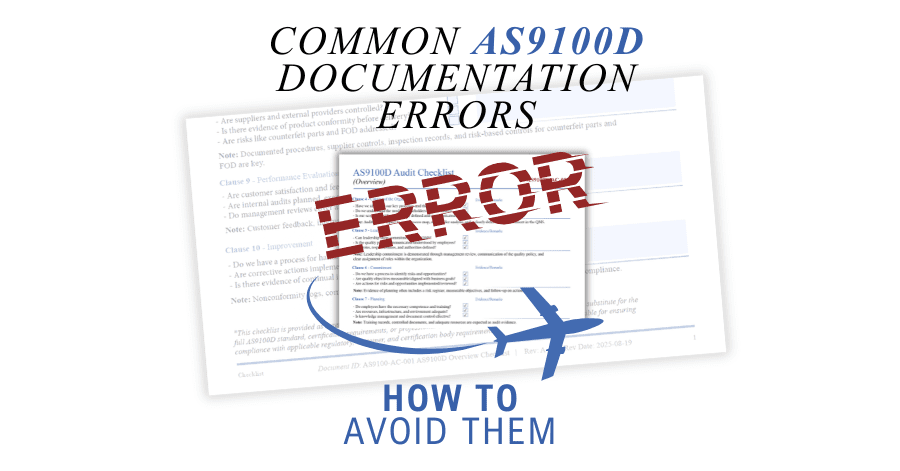
Common AS9100D Documentation Errors and How to Avoid Them

Common AS9100D Documentation Errors and How to Avoid Them

Why these errors persist Complexity grows as teams add forms and procedures. Without strict ownership and a single source of truth, outdated files linger, copies spread, and approvals go missing. Frequent AS9100D documentation errors Obsolete copies in active foldersInternal audits often find old forms inside live work areas. Users grab what is closest rather than […]

QMS: Questions to Ask for AS9100 Audit on Clause 9.2

QMS: Questions to Ask for AS9100 Audit on Clause 9.2

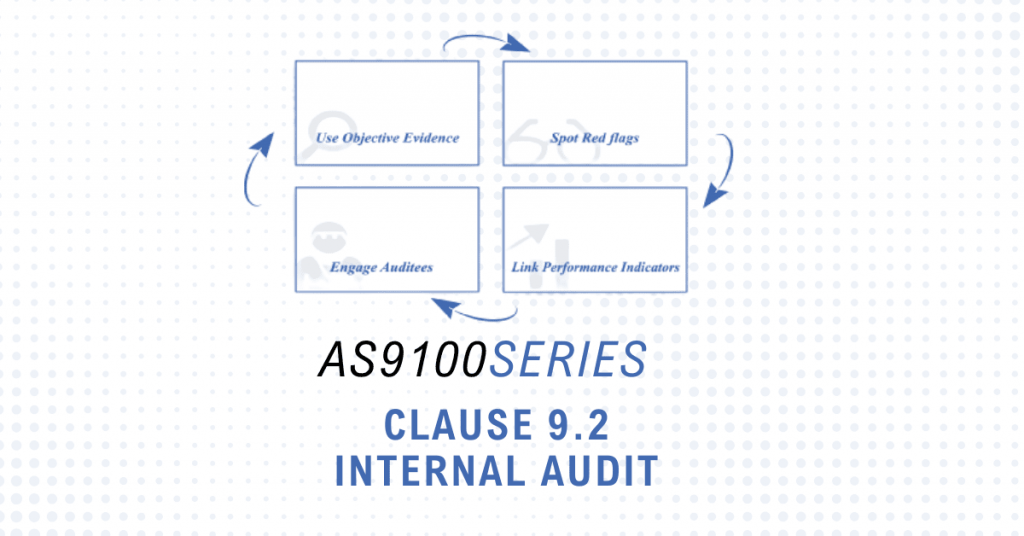
Clause 9.2 of AS9100 Rev D requires organizations to establish and maintain an internal audit program that ensures their quality management system (QMS) conforms to both the organization’s requirements and the standard itself. It also confirms that the QMS is effectively implemented and maintained. Internal audits are not just a certification checkbox. They are a […]

Unpacking the AS9100 Series PDCA Structure: A Powerful Cycle for Aerospace QMS

Unpacking the AS9100 Series PDCA Structure: A Powerful Cycle for Aerospace QMS

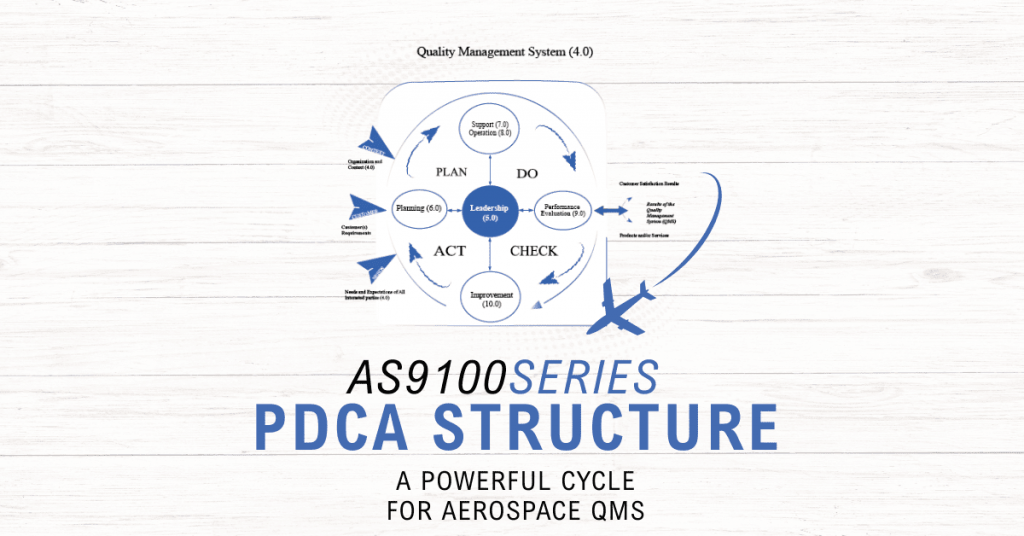
Introduction The AS9100 series of standards, which includes AS9100D, AS9110, and AS9120, is the aerospace industry’s foundation for quality management. Built upon ISO 9001, the AS9100 series strengthens requirements to address the high stakes of aviation, space, and defense manufacturing. At the heart of these standards lies the Plan Do Check Act (PDCA) structure, a […]

Counterfeit Parts in Aerospace: The Growing Threat Undermining Supply Chain Integrity and Mission Safety

Counterfeit Parts in Aerospace: The Growing Threat Undermining Supply Chain Integrity and Mission Safety

Counterfeit parts in aerospace are no longer a theoretical risk—they’re an active and escalating threat that undermines aircraft reliability, operator safety, and national defense capabilities. The FAA estimates that approximately 520,000 counterfeit or unapproved parts enter aircraft annually—roughly 2% of installed components (connectorsupplier.com). These components, which range from semiconductors and fasteners to composite structures and […]

AS9100 Internal Audit Process: What You Need to Know for Aerospace QMS Compliance

AS9100 Internal Audit Process: What You Need to Know for Aerospace QMS Compliance

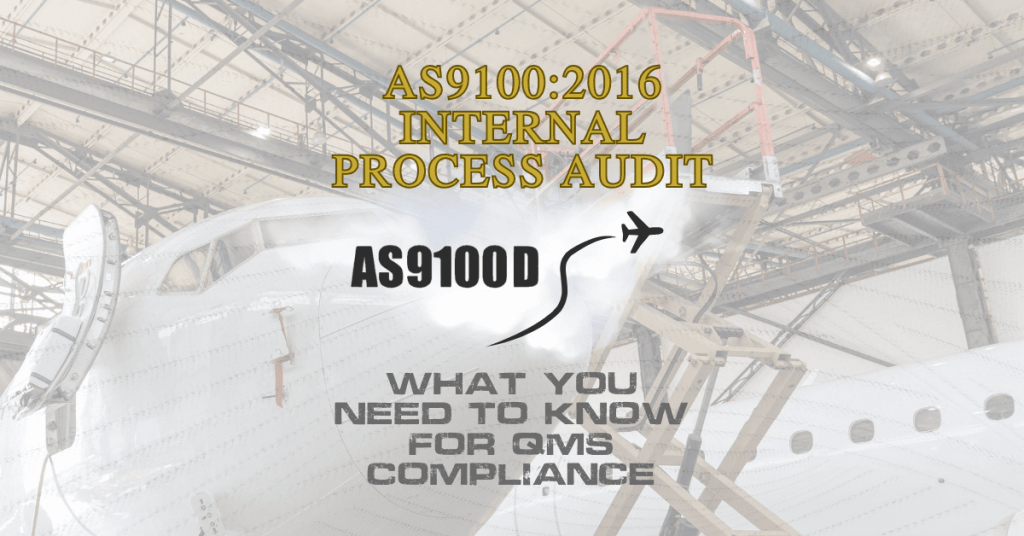
Step-by-Step: AS9100 Internal Audit Process 1. Audit Planning Sample sizing ensures auditors collect enough objective evidence to draw valid conclusions about process performance. AS9100D doesn’t specify a fixed number of records—it requires a risk-based approach. Higher-risk processes demand deeper review and direct observation, while stable, low-risk areas can rely on smaller samples. 2. Preparing the […]