Cause and Effect Analysis: Beyond the Fishbone Diagram

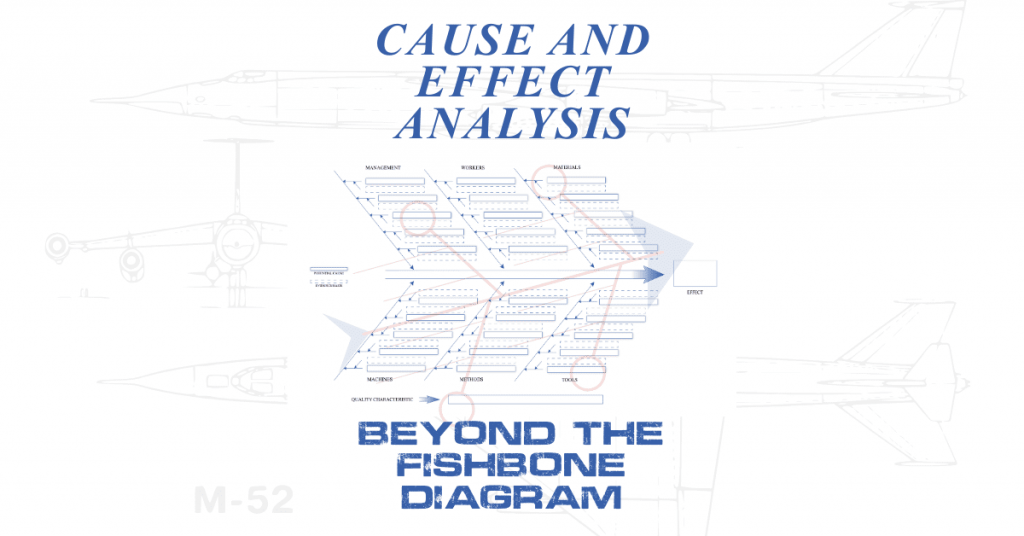
Cause and Effect Analysis: Beyond the Fishbone Diagram

Cause and effect analysis is one of the most widely recognized methods used in quality management to understand why problems occur. Commonly associated with the Ishikawa or fishbone diagram, the method provides a structured way to examine how multiple factors may contribute to an undesired outcome. Despite its familiarity, the method is often applied superficially. […]

Why Word Falls Short for AS9100D Document Control

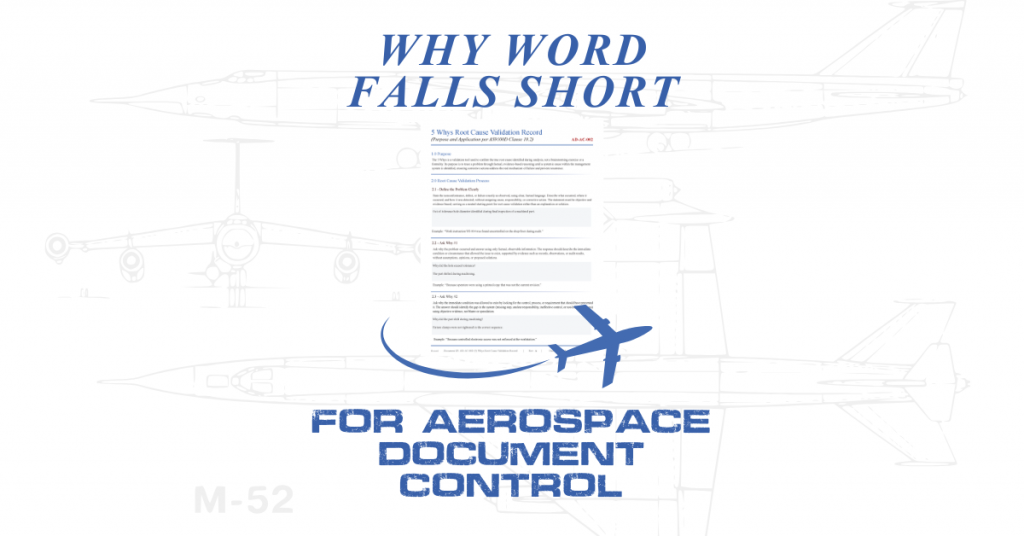
Why Word Falls Short for AS9100D Document Control

The problem with office tools in regulated audits Many organizations rely on Microsoft Word and Excel to create audit materials because they are familiar and easy to use. In regulated environments, convenience does not equal control. When measured against AS9100D Clause 7.5, these tools often place document integrity at risk. What AS9100D Clause 7.5 actually […]

How to Audit Top Management Per AS9100D Clause 5

How to Audit Top Management Per AS9100D Clause 5

Auditing top management under AS9100D clause 5 focuses on leadership behavior, accountability, and integration of the quality management system into business operations. The audit evaluates how executives actively lead and support the QMS through decisions, actions, and resource allocation. Clause 5 addresses leadership and commitment, the quality policy, and assignment of organizational roles and authorities. […]

Closing the Documentation Gap: How AssessmentDrive® Reduces Audit Findings and Saves Money

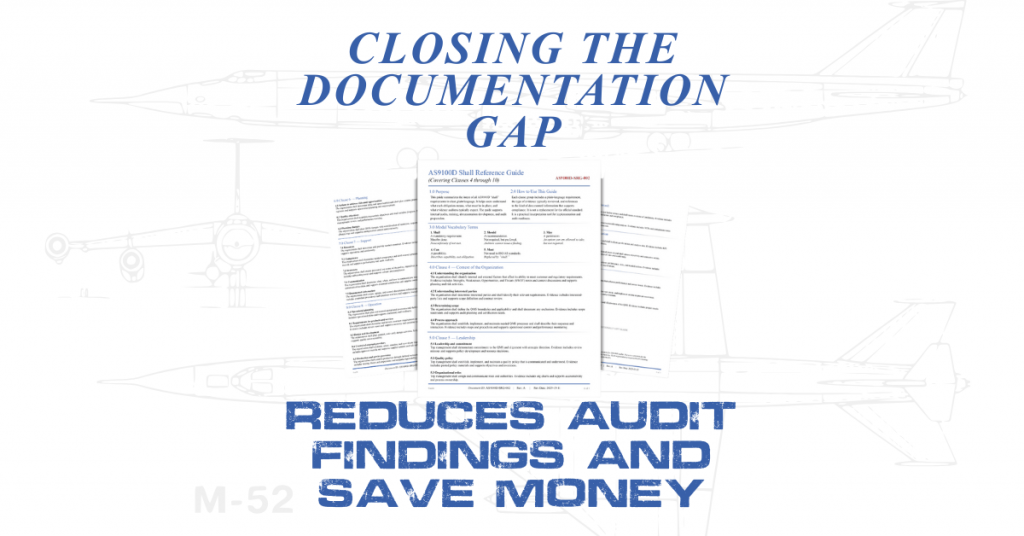
Closing the Documentation Gap: How AssessmentDrive® Reduces Audit Findings and Saves Money

AssessmentDrive® was built to eliminate one of the most persistent drains on time and money in aerospace quality systems: inconsistent, unclear, or outdated documentation. Across AS9100D audits, documentation issues show up more than almost any other type of finding. Auditors commonly flag missing procedures, mismatched revisions, uncontrolled forms, unclear workflow steps, and records that do […]

Introducing AssessmentDrive®: A Clearer Path to AS9100D Documentation

Introducing AssessmentDrive®: A Clearer Path to AS9100D Documentation

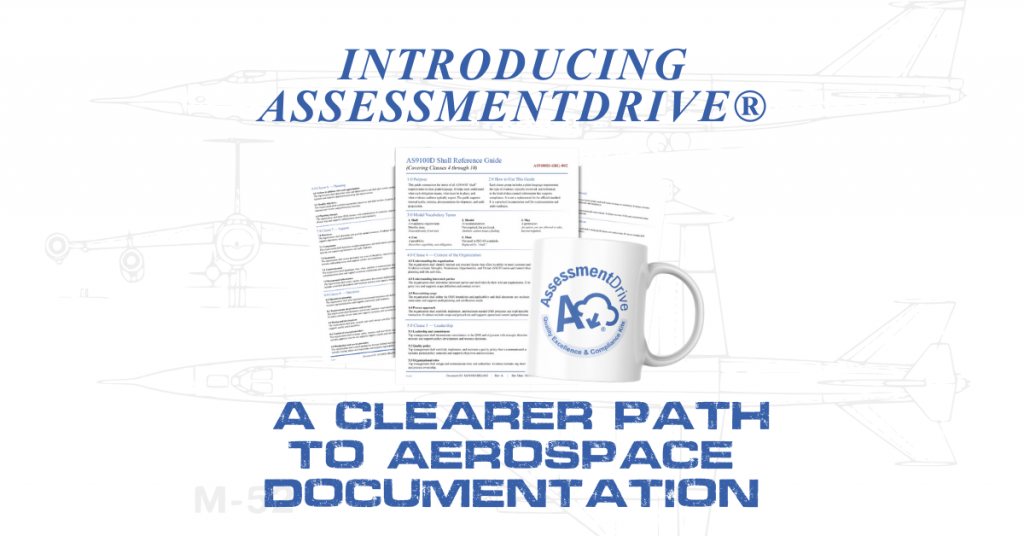
Small and mid-sized aerospace suppliers often struggle with scattered procedures, outdated forms, and documentation systems built over years without a consistent structure. Those gaps become painful during audits, supplier reviews, and customer oversight. AssessmentDrive® was created to solve this.Built from real experience inside regulated environments, the system provides a uniform, audit-ready framework that organizations can […]

Questions to Ask About Documentation During an Aerospace Audit

Questions to Ask About Documentation During an Aerospace Audit

Introduction Aerospace audits depend on traceable, well-controlled documentation. Asking focused questions helps determine whether documents support compliance, reflect current practices, and maintain accuracy across all operations. Document Version Control Key points to review • How documents are approved, revised, and released• How older versions are removed from use• How staff confirm they are using the […]

AS9100 Audit Finding Write-Ups: How to Document Clear, Effective Findings

AS9100 Audit Finding Write-Ups: How to Document Clear, Effective Findings

Writing clean, accurate, and actionable AS9100 audit finding write-ups is essential for internal audits, supplier assessments, and external certification audits. Poorly written findings lead to confusion, weak corrective actions, and repeat issues. Strong write-ups provide clarity, traceability, and a direct path to effective correction. This guide explains how to structure AS9100 findings and includes detailed […]

How Many Majors Do You Need to Fail an AS9100 Audit?

How Many Majors Do You Need to Fail an AS9100 Audit?

Short answer:A single major nonconformity (Major NC) can cause an AS9100 audit to fail or be suspended until it is corrected. Certification bodies treat any major nonconformity as a significant breakdown in the Quality Management System (QMS). Unlike minor nonconformities—which can often be corrected with standard corrective actions—majors demonstrate systemic, structural, or high-risk issues that […]

AS9100 Audit Questions for Human Factors: What Auditors Look For and How to Prepare

AS9100 Audit Questions for Human Factors: What Auditors Look For and How to Prepare

Human factors is one of the most underestimated parts of an AS9100 audit, yet it influences every process tied to quality, safety, and conformity. When auditors reference human factors, they look for evidence that an organization has considered how people’s behavior, workload, environment, skills, communication, and fatigue can influence product quality or service performance. Under […]

AS9100D Shall Requirements Explained: Reference Guide for Aerospace & Defense Quality Teams

AS9100D Shall Requirements Explained: Reference Guide for Aerospace & Defense Quality Teams

Understanding AS9100D requirements remains one of the most common challenges for aerospace and defense suppliers. Clause language—especially the repeated use of shall, should, may, and can—creates uncertainty during audits and system implementation. Many nonconformities are linked to misunderstanding what the requirement actually demands rather than any breakdown in the process itself. When the language of […]